Wednesday, 17 March 2010

insulation, insulation, insulation

You may recall me moaning about the trials and tribulations of trying to source insulation for two properties on Skye.
Well the journey continued and this included the tenant of one the properties getting an energy audit done through the Energy Savings Trust.
The recommendation from them was that it was cheaper to do it yourself.

Before deciding whether to go down the DIY route or get someone in - I checked out a suggestion from North Harris to contact the company that worked alongside TEAS the Energy Advisory Service for the Western Isles.

Last year the Scottish Government announced a Home Insulation Scheme where 10 areas across Scotland were to be targetted for improving insulation for householders in a focused way. The Western Isles was one of the designated pilot areas. A tendering process then got underway and contractors were appointed. What used to be a local set up with a Stornaway based company working closely with TEAS had changed:

The company appointed comes from Sheffield. Yes that place that is a quick hop, skip and a jump to the Western Isles. Essentially the bar is set so high for insulation contracts that only the big boys get to play. To be in the frame at all you need to be accredited. This effectively makes it impossible for a small company to compete as we are talking thousands of pounds to achieve this. What is lost in the process is the local knowledge and willingness to work on the more difficult properties.

The evidence is clear that the big insulation companies go for the easy fix properties: I attended a meeting of three communities in Perthshire of Comrie, Letham and Alyth who have been down this route working from a bottom up rather than top down basis. They tried desperately to appoint local contractors and are now picking up the peices from being forced into using one of the big boys. The big companies motive is profit so they look for the quick returns. Smaller companies look for profit too but when they are local so the imperative to do a good job is stronger and the willingness to be flexible is greater as it is their long-term livilihood at stake. There is a suggestion that this message may be starting to percolate in government quarters. The second round will soon be underway for the Home Insulation Scheme. Will they have listened? Who knows.

Meantime - the choice for insulating properties on Skye was either to get a company from Sheffield in to do the work or do it ourselves. We opted for the latter and bought insulating material from a local company on Skye.
More of this in the next blog.


Tuesday, 2 March 2010

FIT like

I attended training recently run by Community Energy Scotland (see document library then presentations) looking at how communities can generate revenue from renewable energy sources.

It can be a fraught area and sometimes divisive for communities as well as requiring a lot of time, energy and money. Many communities in the highlands and islands have taken the gamble of going down this route as one way to sustain themselves into the future. They have pioneered approaches so that the ride is a little smoother for those that follow.

The recent announcement about the Feed In Tariffs (FITs) mean the incentives to install renewables for income generation are now much stronger. Essentially FITs will be introduced on 1st April 2010. They will provide financial rewards for people, communities and businesses to install electricity-generating technologies. These include solar photovoltaic, wind turbines, hydro power, anerobic digestion and small scale combined heat and power plants.

Such 'feed in' systems have been on the go on in various part so of the world for some time now and they have generally been seen as an effective way to increase the amount of energy coming from renewables.

Under this system there is a guarantee of a minimum payment for the electricity generated as well as the electricity exported to grid. Payment is guaranteed over at least a 20 year period for most technologies. So what is the catch?

There are a few things as some communities are finding out:

Forget refurbishing
Catrine Community Trust found to their cost in planning a hydro scheme for their conservation village that they would not gain any income if they used a refurbished generator - even though the efficiency difference is only 7%. So much for the the notion of reusing and recycling.....and I wonder what the embodied carbon is of a brand new machine...

Installed before July 2009 and over 50kw doesn't count
Some of the early pioneers are essentially penalised though the smaller schemes are OK. ROCs (Renewable Obligation Certificates) may be an option if schemes had already registered for this but the flat rate is nowhere near as generous as FITs.


Accredited installers and products
You need to use accredited installers and products. Sounds fair enough, however there are not too many to be found in the remoter communities and inevitably costs are higher. The accreditation process for installers just now is a major financial commitment making it difficult for small local businesses to contemplate. This is apparently being looked at higher up the government tree.

Anything else?
Domestic installations which received a grant will still be eligible for FITs in Scotland. Non-domestic installations (charities, schools communities and other not-for-profit organisations) which received a grant under LCBP-2 after 15 July 2009, have the choice of either:

• retaining their grant and not being eligible for FITs;

• or repaying their grant and claiming FITs.

Those who received a LCBP-2 grant before 15th July cannot claim FITs. However, up to 31st march 2010 they may be able to apply to Ofgem for a ROC, to qualify for the lower tariff of 9p/kWh, as well as the 3p/kWh export tariff.

For many householders there is still the issue of raising the capital. Though interest free loans are available it is a thought in these days of financial uncertainty to commit to any sort of debt.

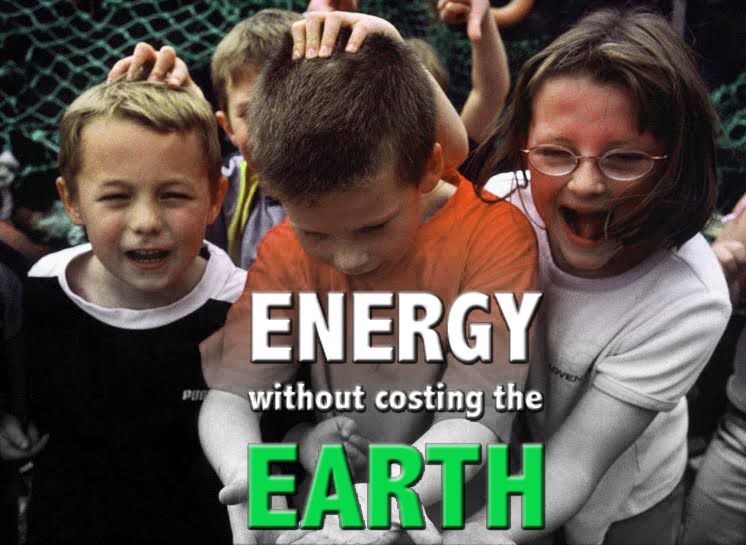
At the end of the day we still also have to look to reducing our energy use through conservation measures and energy efficiency measures. Still the cheapest way to line your pocket. Meanwhile for communities - many will strive to find a way forward that will unite rather than divide them and it is my hope at least that there is a way of harnessing energy - without costing the earth.

Friday, 19 February 2010

Community Woodlands: Sustaining heating; sustaining rural communities


With some 50% of the carbon emissions in the UK coming from heating - a move to a more renewable source makes sense - so it is encouraging news that the Forestry Commission have just announced that the threshold costs for planting trees has been increased from £250,000 to £750,000. But who will gain from this?

I listened to a presentation in my own community the other night about the benefits of 'biomass' or 'wood fuel' for heating energy. They were compelling and it struck me that above all other forms of renewable energy this is a sustainable one for rural communities IF the trees that are felled are replaced and IF there is some control over where felled trees end up. So that would point to communities owning woodland or being in partnership with other landowners. The danger if they do not do this is that large tracts of forest will be grown with a single objective in mind - as we have seen in the past - but more importantly the wood may not remain local.

As the Government moves towards meeting it ambitious Climate Change targets it is likely to move towards large scale wood fuelled biomass power plants. Look around the coast of Britain and you will find planning permission is being sought for such developments across the land. Already EON have a plant - Stevens Croft up and running in Lockerbie. Once commissioned, the energy providers will have the buying power that makes it attractive for landowners to trade directly with them unless the raison d'etre is more than the profit motive. So all the money going into reafforestation just now may be of scant benefit to rural communities. There will be little say in the kind of planting that happens or the destination of any produce. Yet wood can really help to keep the pound local and increase the viability of rural communities if what is grown locally stays locally.

Discussions with residents in Skye recently have emphasised that many people want to see more woodlands that meet diverse objectives including biodiversity, recreational aims and employment as well as wood fuel. Judicious planting can result in an enhanced landscape and a valuable resource for all. It seems ironic then that the one body in Scotland -
Community Woodlands Association - that supports community woodlands faces a funding crisis. Beyond the summer, due the current financial climate, the ability of CWA to provide current levels of support to community woodland groups is in doubt. One of their members has put together a really inspiring video Wha's Like Us? This inspirational poem, written and perfomed by Eoin Cox reflects on the cultural contribution of community woodlands across Scotland.

Abriachan Community Trust exemplify what is possible when communities invest in woodland. In 1998 the community purchased 534 hectares of forest and open hill ground from Forest Enterprise(Now Forestry Commission Scotland). Since then, as a social enterprise, the Abriachan Forest Trust has managed this land to create local employment, improve the environment and encourage it's enjoyment by the public through a network of spectacular paths, family suited mountain bike trails and innovative education opportunities. Thanks to their continuous cover thinning, they also have seasoned firewood available and are planting for the future. The firewood operation raises funds to sustain other activities.

Rural communities have a golden opportunity now to build a sustainable energy source for the future that can also enhance the landscape, increase biodiversity, increase recreational options as well as provide local employment - if they gain some control of land or work in partnership with sympathetic landowners.


Thursday, 14 January 2010

The big green challenge - small is beautiful

Congratulations to the Isle of Eigg who have jointly won the NESTA Big Green Challenge along with two other community groups from other parts of the UK. Evidence that small is beautiful. They now have £300,000 to further their endeavours and spread the word.
Those who attended the event we held at Sconser over a year ago were inspired by the commitment and down to earth approach of the community of Eigg. We heard about how they have moved to almost 100% renewable energy - and of how the whole island had agreed to a cap of 5 kw per household. Step over it and you have a reconnection fee to pay. In addition Householders’ lives have been transformed through insulation projects, lift sharing has increased massively and other measures taken to cut the amount of fossil fuels shipped onto the island.
Often I hear people say - but they are an island - it is easier to do - they are a small set up. However, what is most inspiring I think about what they have done is to engage with everyone on the island and far beyond. Their ' islands going green' project has inspired thousands beyond the island to take action - including the John Muir Trust. At a recent gathering of John Muir Trust staff we looked amongst other things at what Eigg had done and their simple approach was used to prompt discussion which is following through into action - more of which will be reported later. The key seems to be that by working at a 'human scale' and having fun on the way, it is easier to get buy in.
Small can indeed be beautiful though not without its difficulties. Communities are often subjected to the same rigorous processes as large companies as various communities have experienced. This means a lot of time and effort can go into getting something off the ground and sometime to no avail. It is disappointing for North Harris to have concluded after their long and diligent work that the wind turbines they have both secured permission and funding for will not be viable because of the weather conditions -ironically too much wind hampers production as well as too little.
Meantime the large scale developments look set to proceed with Muaitheahal Wind Farm in South Lewis being approved as well as the Beauly Denny line. It is interesting to note that Schumacher's well known book - 'Small is Beautiful' - is subtitled 'The Study Of Economics As If People Mattered'. Now that would be a novel approach to development. Time will tell if the Eigg approach or the big company approach is the better for us all. I know where my betting would lie.

Tuesday, 22 December 2009

Copenhagen - the road ahead starts at your front door

A thoughtful guest blog from Stevan Lockhart -Project Officer for Assynt Renewables

On the news pages of the Assynt Renewables website, we did not report at all on the build-up or process of the Copenhagen conference as news about it was everywhere. They even counted how many leaders arrived in electric vehicles. Copenhagen seemed to be item number one on the agenda for such a long time. Now here we are, wondering exactly what happened and whether it’s been a good thing or a bad one, a missed opportunity or a good start. Were we misled by all the expectation that grew in its run-up, with headlines such as “Road to Copenhagen,” which now seems to have resulted only in a general agreement that we should all do better? It seems to have been an example of a complex issue dissected to the point of simplicity, which turns out to be complex after all.

Summary: Coming at this time in the history of humankind leaves us struggling to understand the complexities that go to make up what happened at the Copenhagen Accord. But concentrating too much on this one event leaves us distracted from the things that matter. And these are things that we as individuals can do something about.

We are left with more questions than before, though at least now there is no illusory silver bullet of “Copenhagen” sorting everything out. Conveniently released details of scientific squabbling made us wonder whether we are being hoodwinked by climatologists trying to make a name for themselves, or hoodwinked by nay-sayers trying to establish their own scientific proofs.

Claims that soot in the upper atmosphere is “worse” than carbon dioxide for global warming have been thrown in too. China and India are portrayed as the big problems, when we in the West, and America in particular, are far worse offenders, the finger pointing looking, even to the least intellectual, like the distraction it is. In this instance, the BBC, for example, did and does itself no favours for purported impartiality, rigorously favouring our own point of view.

There were those saying that every nation on the planet had to agree to change its ways with immediate effect no matter what the other consequences and there were those saying that the required changes to systems of government would amount to a global police force and global government to make Orwell’s 1984 look like a feelgood romance. For them, Copenhagen’s “failure” comes as a relief. And there were those saying simplistically that reductions in our carbon emissions would solve the problem while others said that global warming has nothing to do with carbon.

On the other hand, as Roger Harrabin has reports, “If the climate was a bank they would have saved it, said Venezuelan President Hugo Chavez. But it is not. And they have not.”

But none of this matters.

Forget the climate. The fundamental issue, which has not yet been addressed in any way, is the basic fact that we simply consume to much of the planet’s resources. Much of what is proposed, increased use of renewable energy, electric vehicles etc, may be considered to be window dressing. Magic schemes such as carbon sequestration and other technological wonders are held out as “just around the corner.” We simply need technology to solve all our problems. But the reality is different. 

As was re-iterated in “The Big Debate” on BBC Scotland on 16th December, if everyone alive right now lived the way we do, we would need two planet Earths to supply the resources we use. That is the problem. We simply use too much, and we do not understand that we have now hit the limits.

So why can’t we act? Why do we find it so much more attractive to head blindly along a path that, deep down, we know leads to destruction? It is, one suspects, because we humans are so poor at recognising risk. Take an obvious example, our response, in the UK at any rate, to modern crime. 

We have signed away many of our liberties because of our perceptions of the modern danger of acts of terror, yet the danger posed by the the biggest killer by far, the car and fast road transport, we simply have processes such as the largely ignored NCAP safety ratings. Our response is stupidly disproportionate; it seems as though we have no logical ability to tell real from perceived threats.

We need a massive event, some cataclysm, to indicate to us the trouble we are in. Scientists graphs do not move us to action. And the proof of that is global response to the banking failure. Here, in spite of all the climate and energy related improvements which we are told we can’t achieve because of economics, we found the ability, within weeks, to spend amounts of money the size of which we can’t even understand.

So until something happens, like the North Atlantic Drift stopping flowing, creating some massive and unignorable event, we will continue in our international bickering; we do not realise that the times have changed.

We should heed voices like E.F.Schumaker, who wrote a long time before climate change became the issue of the day:-

To talk about the future is useful only if it leads to action now. And what can we do now, while we are still in a position of ‘never having had it so good?’

And that’s the issue. At a time when politicians should be showing leadership, we see the effects of the expenses scandals, leading us to questions their real motives. When we are told things need to change dramatically, the most dramatic change of which we are aware is the amount we are having to pay anonymous bankers. And at this time, we have the backdrop of the Iraq enquiry further introducing doubt into our minds about how well politicians have our best interests at heart. 

We have “mechanisms,” like carbon trading, which, it seems, are simply there to enrich a small proportion and which, it seems, are used in a very different way to their intention, rather than achieving their real aim.

But, says Schumaker, we can make a difference. If we start behaving differently ourselves. If we as individuals put our own ethics first, rather than pre-fabricated ethics from news services or corporate PR. If we question, ourselves and how we live. If we start at home.

Communities aren’t always geographic groups of people. Sometimes communities are simply individuals who happen to be going in the same direction. And groups of communities may make up a groundswell Groundswells can change the world.

But what can I do? Some excellent examples can be found on the World Wildlife Fund website at http://www.wwf.org.uk/how_you_can_help/change_how_you_live/

Understand how much you consume. The WWF has a tool here http://footprint.wwf.org.uk/ which can tell you how many Earths would be required for everyone to live the way you do.

Save energy. Don't assume the way you've used energy in the past is a point to aim for in the future.

Decide carefully whether or not to buy things. Good advice in troubled economic times too.

Consider how much, why and how you travel. Can you make better choices?

Examine your diet, the food you eat and where you get it.

Well what about Copenhagen? Has it put us on the right road? Perhaps not. So forget the possibility of some immense change in life that gets thrust on you. Initiate change for yourself. Do something, even if it’s just changing your mind. Take some of the above ideas, or generate some of your own. Set some standards for yourself. Once that process starts, by ones, twos, hundreds, thousands and millions, Copenhagen’s best outcomes will be dwarfed, and who knows, the world may well be a better place tomorrow.

Tuesday, 8 December 2009

Virgin Oil from North Harris


Thanks to David Wake, Energy Development Officer from North Harris Trust for this guest blog.

I feel like a proud father after the birth of his first child. Today I have my first batch of Biodiesel –and it looks good enough to drink!
Way back in July, the North Harris Trust started collecting waste vegetable oil. We opened up a Community Recycling Site in the summer and thought this would be a good project for the two part-time staff, during the long winter months when the site has fewer visitors. The first purchase was a 1000 litre IBC container (after we’d exhausted all our fish farm contacts) to build up a stock of oil. This has always been the greatest uncertainty for me. Harris only has a handful of hotels and bars that use cooking oil, so stocks are limited. Most proprietors are just glad to see the back of the oil. The official route for disposal is an 80 mile round trip to the Municipal Waste site –and a fee for disposal. So when the Trust offered to take the oil, they were very happy to oblige. The only catch though, is that there are a few enlightened individuals who are also making Biodiesel for their own consumption. The proprietors say “first come first served” so there are no guarantees on the source of raw material for our little process.

After a brief conversation with Community Energy Scotland, I made contact with a handful of other trail-blazing communities. I spoke to people already making their own road fuel in Uist, Lanark, Orkney and Eigg to find out how difficult it was. If you look on YouTube on the web, then there are guys in America mixing up chemicals in their back yard, with home-made equipment. After many questions, I finally made contact with Green Fuels who make the Fuelpod range of covertors. Their product is self contained and looked to me to be one of the safest. They also supply all the bits and pieces that you need to go with the machine, from chemicals to test equipment. I actually ordered my Fuelpod2 through a community development trust in Lanarkshire. They are fuelling a fleet of community mini-buses from their machine. They gave me the re-assurance I needed to start making fuel and were very patient with me. As an agent for Green Fuels, they also put money back into their community from my purchase.

Prior to ordering, I did try to seek funding for the project. Be aware that some of the larger climate change funds don’t want to see any benefits to local business. They need carbon savings for the man on the street. That one was difficult for me to justify. I was lucky enough to convince my Directors that I could achieve a 2 year payback on their investment and so self-funded the equipment.

After 4 months, and the end of the summer tourist season, we have amassed a stock of just under 1000l of sieved oil. This will make enough Biodiesel for a year’s worth of Trust motoring. With oil in hand, I set about making my first fuel. The process is quite simple. It involves mixing the waste vegetable oil with methanol and a liquid catalyst. All this is done in sealed containers. After an hour of reaction, and an overnight settling, hey presto, you have biodiesel. It’s quite amazing how the biodiesel separates from a thick treacle-like Glycerine. All you have to do then is pour off the glycerine and filter the biodiesel to take out any impurities. By the end of day 2, we had 50 litres of what almost looks like a good malt whisky.

The Trust runs a diesel Citroen Multispace. With some trepidation, I reversed it into the shed at the Recycling Centre to fill up for the first time. The Fuelpod has its own fuel pump –just like at a petrol station. With a full tank, I headed back to the office. I knew one of my colleagues was going out in the afternoon and needed the vehicle. A great dilemma gripped me. Do I tell, or do I keep quiet and wait to see if there are any problems? The biggest issue with biodiesel is that everyone says it works and that there are no problems running it in standard diesel cars and vans. There are no guarantees though. The manufacturers of the machines will say that it’s difficult to maintain a standard of quality when you make such small batches. Speaking to all those other community groups that are making it – they’ll all say “We run it in all sorts of cars, with no problem” but there’s still no guarantees. My plan is to blend it with standard “fossil” diesel initially and reduce the mix as time goes by.

It’s a simple process – and if you can secure yourself a stock of waste oil you can be saving up to eighty pence a litre whilst significantly reducing your carbon footprint. So why isn’t everyone doing it?
http://greenfuels.co.uk/product/fuelpod-2.aspx
http://www.ruraldevelopmenttrust.co.uk/

Thursday, 3 December 2009

Think global - act local


As the big guns are gathering in Copenhagen to deliberate on the state of the planet, a dedicated group of people are holding vigil in Trafalgar Square in London where they are holding a climate camp. There is also an Ice Bear that is rapidly melting in the square - despite the cold. I happened to be in London over the weekend and saw this poignant symbol of the issues we face.


The Ice Bear seemed dwarfed at times by the grand surroundings and crowds and that for me reflected how it can feel when thinking about climate change. What is agreed to ( or not agreed to) globally over the next few days will potentially dictate our futures. The nations of the world are deciding what commitments they will make to lower their carbon emissions at the United Nations Climate Change Conference. Many fear that the leadership will not be strong enough to take the measures that many scientists say need to be taken to avert the worst impacts of climate change. It is easy to feel that we have little control in these world wide affairs but what is heartening is the commitment and effort being put in at a local level within many communities.


Last week saw the announcement of another round of Climate Challenge funded projects. It is inspirational to see what is happening at a community level. Many of the communities that the John Muir Trust works alongside have successfully applied to the Climate Challenge fund for support either through the Powerdown Initiative supported by Community Energy Scotland, or independently.

There are a couple of interesting intiatives being funded in this latest round. One is a bid by Comrie Development Trust in Perthshire to mirror the Governments Climate Change Delivery Plan at a local level. This entails intially carrying out feasibility studies to see what is possible in terms of looking at electricity, heat, transport, land use and waste. Comrie have also added in attiudes and behaviour change which interestingly is missing from the Governments plan.

Another interesting initiative is based in Glen Lyon. Here they are looking to see if it is possible to fuel houses in the future from locally sourced wood through expanding the current wood supply and investigating options for coppicing. The area met its own fuel needs some hundred or so years ago so learning from the past may give clues to the future. It is hoped the scheme will be able to revive traditional skills, promote wildlife, create employment, and save money.

If you have an idea in your community for reducing your carbon footprints need you need to get your ideas to grant administrators - Keep Scotland Beautiful- by 13th Jan 2010 for the next panel at the end of Feb. Be aware though. ....It can take quite some time from a panel decision to announcement by a minister if you are successful in gaining a grant. This can have implications for some projects will be even more crucial as the timescale for the fund decreases. It is due to finish in March 2011 and it is not yet clear if an initiative which has allowed many communities to act locally on a global issue will continue. Now that would be a good Christmas present from the Government.