Thursday, 1 July 2010

Glenlyon Woodfuel Initiative

Some of you will recall Jamie Grant who previously was the John Muir Trust Communications Officer.

Jamie took great interest in what was happening in communities around sustainability. Inspired by meeting and speaking to various people he encouraged action in his own community of Glen Lyon.

As a result, in March this year, Tom Beels was appointed through climate challenge funding to look at future sustainability.
Thanks to Tom for information about the project and forthcoming woodfuel event on 17th July.

Glen Lyon, in Highland Perthshire, is a remote community of around 90 residents, strung along 22 miles of single-track road.

We have received Climate Challenge Funding to see whether it is feasible for the community in Glen Lyon to reduce its dependence on oil as a main heating source, by burning some of the low
value timber that surrounds them.

The initiative is also aimed at reducing the community’s carbon footprint and encouraging native woodlands in the area.

Glen Lyon has recently been found to have some of the most intact woodland habitats in Scotland. By re-introducing traditional management techniques, such as coppicing, we hope to enhance and complement the wildlife around us. We are also involving local children in tree planting and hope they will see the fruits of their labour.

We are holding a woodfuel event on Saturday July 17th from 12 noon until 5pm at Glenlyon Kirk.

A number of heat surveys have been completed in Glenlyon to look at the potential for a change from oil to wood heating systems with more surveys planned. Initial results suggest the proposed Renewable Heat Incentive (RHI) could make the payback time for installing a wood boiler as little as 3 to 4 years.

Steve Luker a consultant to the forestry industry on RHI will be joining us to answer questions and provide information on RHI. A valuable opportunity for you to hear from an expert about a scheme that will pay you for burning wood efficiently.
Heating systems expert Bernd Pinamonti of Thermotec Ecosystems LTD will give advice on the components and costs involved in installing and maintaining modern wood fired systems.

Plans for a woodfuel supply within the glen will be outlined, accompanied by a demonstration of an “Iron Horse” timber extraction machine. Locally made small roundwood craft items such as hurdles, pea sticks and staffs will be on display and available to buy.

And if this were not enough, representatives of The Big Shed and Loch Tay Food Chain will also give talks and answer questions about the exciting projects unfolding “over the hill”.

We hope to have even more attractions nearer the date so if you think you could add to our highly informative afternoon or would like more details, please contact Tom Beels on 01887 866291

Tuesday, 29 June 2010

Knoydart Hydro Open Day

A quick update from Gwen Barrell at Knoydart about a recent open day as part of the Scottish Renewables Festival.


On Wednesday June 15th Knoydart Renewables Ltd (a wholly owned subsidiary company of Knoydart Foundation) held an open day at its turbine house as part of the Scottish Renewables Festival.

Tommy McManmon, Knoydart Ranger writes, “We had five people and a couple of dogs who really enjoyed the day. Angela Williams, our Development Manager, gave an introductory talk in the village hall, where people had the chance to browse the display boards. We travelled up to the turbine by Landrover. One visitor had worked in construction of hydro schemes in the past, so was happy to look around the turbine shed and tell us what things were! The turbine wasn’t running because it was under maintenance, but this was actually ideal as it meant we could have conversations with each other. People were interested in how many properties were supplied by the system, and how often shut-downs occurred. All were very impressed by a community running such a large electricity scheme.”

The visit coincided with some works on the dam, and in a scheduled shut-down of the turbine which worked out beautifully for the visit. The Turbine House is not open to the public though we have been holding an annual “Tea at the Turbine House” guided walk for the past couple of years in order to educate local people and visitors about the scheme. Since its refurbishment in 2002 the hydro has provided over 4,750,000 kWh of (next to) zero carbon electricity. (We obviously use a bit of oil for lubrication, diesel for the back up generator, and to get to and from the turbine which is situated “up the glen” towards Gleann Meadall.

In addition to the community owned hydro there are two micro hydros in Knoydart for those outwith our system, and interest in developing some more micro systems. A recent study of Airor burn under the auspices of the Powerdown project showed that there is potential there to assist the community at Airor to cut its carbon footprint and use diesel generators substantially less.

More information http://www.knoydart-foundation.com/

Wednesday, 23 June 2010

Changing Gears


The Parent Council at Elgol Primary School held a jumble sale recently to raise funds for the school. Top this off with teas, coffees and home baking and there is bound to be an audience.

Also present at the jumble sale and looking for an audience were energy and wood fuel related stalls the Parent Council had agreed could be part of the event.

Energy Saving Trust had a model house -showing how to reduce energy bills and an eco-driving simulator showing how to reduce fuel bills. The John Muir Trust had a display showing the heat leaking out of its, as then, uninsulated, property at Strathaird whilst there were displays from Wood Energy Scotland and Alastair Robertson from Highland Eco-Heat a Skye based wood fuel installer.

The biggest hit was the eco-driving simulator which caused much mirth and merriment as various people tried their hand at driving to reduce fuel costs and carbon.

Top tip is all about changing gears.
- Shift into a higher gear as soon as possible - changing up between 2,000 and 2,5000 rpm.

Another tip to lower your fuel bills and carbon footprint: Drive more smoothly - anticipating road conditions and taking your foot off the throttle gradually rather than braking suddenly.

Did you know that if you drive at 50mph rather than 70 mph - this reduces your fuel consumption by 10%?

The school children were largely determined to test the speed limits!More tips are to be found at the Eco Drive website.


Monday, 14 June 2010

Gardens take off in Knoydart


A quick update from Gwen Barrell at Knoydart about the progress of the community garden which only received funding a few months ago. Already things are flourishing.


Knoydart Gardeners headed for the Road to the Isles Agricultural Show recently to meet up with other gardeners and display their progress in the garden since receiving Climate Challenge Funding.


A team of volunteers helped re-cover an old polytunnel at the end of last month, and already the tunnel is under cultivation by keen community members who have also been busy working on their outdoor veg plots. A wide range of fruit and vegetables are under cultivation – cutting down on food miles. Whilst gardening takes some effort, it saves time, carrying boxes of shopping from the ferry – a time consuming task!

A garden open day is planned for Saturday August 28th with a band in the evening too. More info from gwen@knoydart.org

Friday, 14 May 2010

Wet and wild in Kinlochbervie

If you are out and about in Kinlochbervie over this weekend there are a series of activities celebrating International Biodiversity week. From ranger led walk to boat trips.

Saturday, 15 May 2010 and Sunday, 16 May 2010

Activities from 10am till 4pm

Kinlochbervie Village Hall and Loch Innis
A programme of Events is available from http://www.kinlochbervie.info/

See previous blog on what biodiversity has to do with you...

Saturday, 1 May 2010

What a lot of rubbish

Sea borders many of the areas that the John Muir Trust owns or has partnerships with. The beauty of wild landscape combined with seascape attracts many visitors to these areas and is a vital part of the tourism economy that sustains local communities.

In this guest blog, Rory Syme, Communications Officer for the John Muir Trust, reflects on a recent Trust work party to clear litter from Camasunary, near Elgol on the Isle of Skye.

Over Easter Weekend 17 volunteers took part in a litter pick on Camasunary, as part of the Trust’s annual programme of conservation work parties.
The bay is bordered by the Trust's Strathaird propoerty and is a key gateway to the Cuillin, one of Europe’s finest mountain ranges. During peak season hundreds of walkers from all over the world will walk past every day.

We found a great variety of rubbish, from shotgun shells that had been washed down-river, barrels and crates, toothbrushes, crisp packets, bottles, and even the petrol tank from a small boat. The majority of the litter though seemed to be small pieces of brightly coloured plastic fishing net. In places this covered the beach.

Not only was it back breaking work to pick this up, the sheer amount of plastic debris made it hard to appreciate that we were making a difference.

Plastic will never biodegrade, only slowly disintegrate into smaller pieces, making it a serious danger to wildlife. 90 per cent of fulmars found dead in the North Sea have plastic in their stomachs.

The work party inspired some discussion about our efforts. Is it right to gather up litter from one place to then pay for it to be transported and buried in landfill a few miles down the coast?
Can a small team of volunteers really make a difference against the huge tide of litter that is washed ashore every year? And what can we do about the vast majority of our marine litter, which either sinks to the bottom of the sea or just bobs around on the ocean, sometimes in huge amounts, as with the Great Pacific Garbage Patch?

As a society reducing the amount of litter we produce by becoming less disposable and more sustainable is a good starting point, and on a local level we need to tackle the visible effects of a life dominated by plastic.

For organisations like the John Muir Trust volunteers play a key part of achieving our objectives. We have a healthy interest in our work parties each year, and you can find out how to get involved on our website, but there are many other ways to help reduce the amount of litter in wild places.

Individuals can make a difference by going a step further from Leave No Trace and aiming to leave a positive footprint behind by filling a bag with litter on every walk.

Communities, schools and other groups can organise their own clean-ups through programmes like the Marine Conservation Society’s Beachwatch Big Weekend, or the Keep Scotland Beautiful’s Big Spring Clean.

Businesses that rely on tourism can support efforts to protect the landscape that provides their livelihood, through sponsorship, or just offering a free cup of tea at the end of a hard day’s litter picking.

Can we really afford for our natural heritage to disappear under piles of plastic?

Friday, 30 April 2010

Biodiversity – what has it got to do with us?

This year is International Year of Biodiversity. In this guest blog Liz Auty, Biodiversity Officer for the John Muir Trust shares information about biodiversity and climate change in time for Scottish biodiversity week.

Many people would agree that conserving our wildlife is important for its own sake, but we often do not realise the essential services it provides for our quality of life. For instance, our biodiversity provides services like clean air, clean water and food.

It is now recognized that it is not just the number of species we have, but how they interact together in ecosystems that it is important. For example conserving a species of pine tree in a garden may save the species, but will not provide the flood alleviation ‘service’ that these trees thriving on a mountainside might. Or species conserved just in a zoo will no longer be part of the ecosystems they were once part of contributing as a whole to a healthy functioning planet.

Do we need to worry about our biodiversity?

Yes! Species are being lost and habitats degraded, and our climate is changing. Whilst species extinction is a natural part of Earth's history, over the past 100 years, humans have increased the extinction rate by at least 100 times compared to the natural rate. The current extinction rate is much greater than the rate at which new species arise, resulting in a net loss of biodiversity.
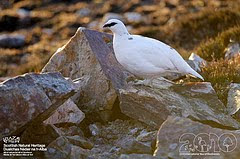
Some species of our higher mountains may be lost. This could include birds like the snow bunting, which occur on our Nevis Estate. According to a report from the RSPB and Durham University, the average range of British birds will move 550 kilometres (340 miles) to the north by 2100 as the climate heats up.
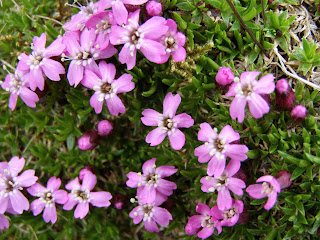


On our Nevis estate, a site condition monitoring report from SNH showed that the Arctic-alpine plants were declining. The report concluded that ‘the most likely long term threat is climate change, particularly as this has an effect on the distribution and duration of areas of late lying snow. Some of our rarer species will be outcompeted as the temperature warms.
Other mountain specialists like the Mountain Ringlet butterfly, found on Ben Nevis and Schiehallion are facing the same threats from changing climate.

You might also find this 2004 report by SNH interesting: Climate Change Impacts on Habitat and Species.

What is the John Muir Trust doing?

Through biodiversity management and monitoring we aim in the short term to:
• Maintain any features of protected areas that we manage in favourable condition
• Reduce the damaging impacts (grazing and trampling) on vegetation of browsing animals
• Observe and record responses in vegetation condition as a result of changes in management

Our longer term aims (beyond the next five years) are to:

• Encourage more natural processes,
• Improve the condition of habitats, species diversity and natural altitudinal gradients, from sea or glen to summit (e.g. natural tree lines),
• Expand and improve the quality of native woodlands,
• Gather data to demonstrate the effectiveness of our approach to others

We hope that the land management strategy being pursued will lead to an improvement in the quality of habitats over time, despite any potential detrimental effects caused by climate change. "

What can you do for biodiversity?
Lots! One way to
encourage biodiversity is to grow trees and plants which are native to your area and which will be the ones most likely to provide the best food and shelter for native animals rather than rushing off to buy anything labeled "butterfly home" or "food for native birds".

You can also get involved in recording the wildlife you see, to help keep a track of how things might be changing. For example the
Woodland Trust Natures Calendar, or the British Trust for Ornithology's Garden Bird Survey .

Many communities are already taking steps that make a difference from growing food more locally in Knoydart to growing trees on Eigg, North Harris and on Skye.

It would be great to hear about anything you are doing to support biodiversity.